AI-Powered Recruitment Tools: Comparative Analysis of Popular Solutions
May 5, 2026
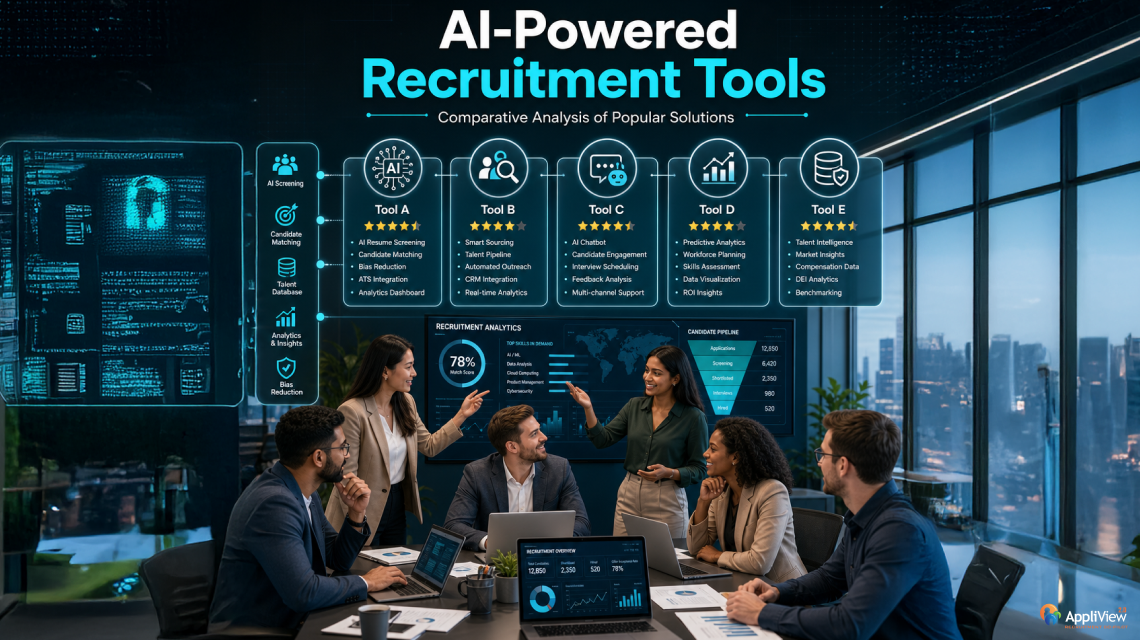
This article provides a comprehensive comparative analysis of today’s leading AI-powered recruitment tools , examining their features, strengths, pricing, and real-world applications. It highlights how AI is reshaping talent acquisition through automation, predictive analytics, and intelligent candidate matching. The article also explores key challenges such as bias, privacy concerns, and implementation barriers while outlining future trends that will define the next generation of recruitment technology.
Introduction Revolutionizing the Hunt for Top Talent

In today’s fast-paced talent acquisition landscape, recruiting teams are often overwhelmed with resumes, candidate outreach, and time-consuming scheduling tasks. This is where AI-powered recruitment tools are transforming the hiring process by enabling efficient recruitment automation and streamlining repetitive workflows. By leveraging advanced AI hiring solutions, organizations can reduce time-to-hire by up to 70% while significantly improving hiring speed and decision-making accuracy. These intelligent systems not only enhance candidate screening and engagement but also optimize overall talent acquisition strategies. This analysis explores the leading AI recruitment tools, comparing their features, strengths, and pricing to help businesses choose the most effective solution for their hiring needs.
The Evolution of AI in Recruitment
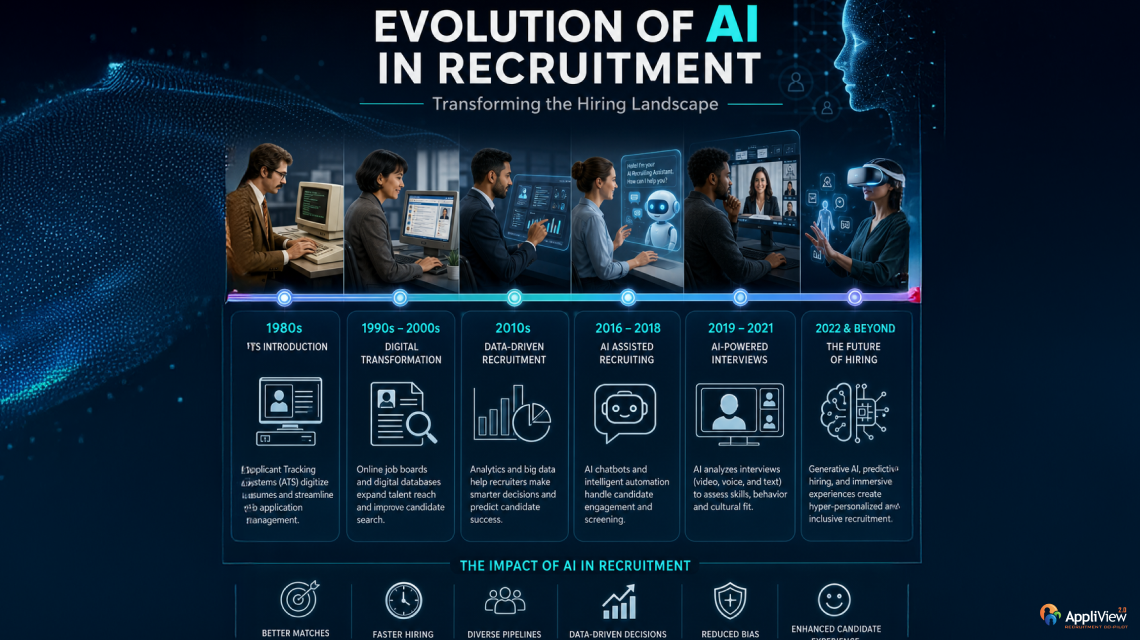
The evolution of AI-powered recruitment tools began in the early 2010s with foundational features like resume parsing in Applicant Tracking Systems (ATS), laying the groundwork for modern recruitment automation. With the rise of advanced natural language processing (NLP) technologies after 2020, AI hiring solutions have become significantly more intelligent and data-driven. Industry leaders like HireVue and Eightfold AI have pioneered innovations in skill-based hiring and AI-powered candidate evaluation. By 2026, these advancements have evolved into fully AI-native recruitment platforms, widely adopted by enterprises to transform traditional hiring into proactive, scalable, and efficient talent acquisition strategies.
Comparative Analysis of AI Recruitment Tools

AI-powered recruitment tools leverage advanced machine learning to streamline every stage of the hiring process, from sourcing to onboarding. These intelligent AI hiring solutions offer key capabilities such as semantic resume parsing, AI-driven candidate scoring, and real-time engagement analytics, enabling more accurate and data-driven hiring decisions. By utilizing recruitment automation and natural language processing (NLP), these platforms reduce manual effort, eliminate bias, and significantly improve hiring efficiency. Below is a comparative overview of the top AI recruitment tools in 2026, highlighting their strengths, features, and pricing to help businesses select the most suitable solution for their needs.
| Platform | Best For | Core Strengths | Key Features / Stats | Pricing (Est. 2026) |
|---|---|---|---|---|
| Paradox | High-volume hiring | Conversational AI (Olivia), auto-scheduling | 97% scheduling reduction, chat/text engagement | Custom |
| Eightfold AI | Skills-based hiring | Talent intelligence, internal mobility | 90%+ matching accuracy, deep skills ontology | Enterprise |
| SmartRecruiters | Enterprise ATS | AI screening (Winston), CRM | 70% faster hiring, 50% boost in velocity | Custom |
| hireEZ | Talent sourcing | AI search across 850M+ profiles | Rediscovery of past candidates | ~$100/user/month |
| HireVue | Video interviews | AI video analysis, assessments | 85–95% screening accuracy | Per use |
| Zoho Recruit | SMB hiring | Zia AI, semantic search | 75+ integrations, multilingual | Free / $30+ |
| MokaHR | Enterprise hiring | AI parsing, interview insights | 67% faster analytics, GDPR-ready | Custom |
| Greenhouse | Structured hiring | DE&I tools, summaries | Extensive integrations | Custom |
| Zapier | Workflow automation | 8,000+ integrations | Builds AI workflows dynamically | Free / $20+ |
| Manatal | Candidate sourcing | AI database (250+ boards) | Auto-enrichment, ranking | ~$15/user/month |
These AI-powered recruitment tools leverage advanced natural language processing (NLP) and machine learning to enable unbiased candidate matching and improve hiring accuracy. By integrating intelligent AI hiring solutions, organizations can enhance decision-making, reduce manual intervention, and streamline the entire recruitment process. This shift toward recruitment automation transforms traditional hiring into a faster, smarter, and more scalable approach, empowering businesses to build efficient and data-driven talent acquisition strategies.
Real-World Applications and Success Stories
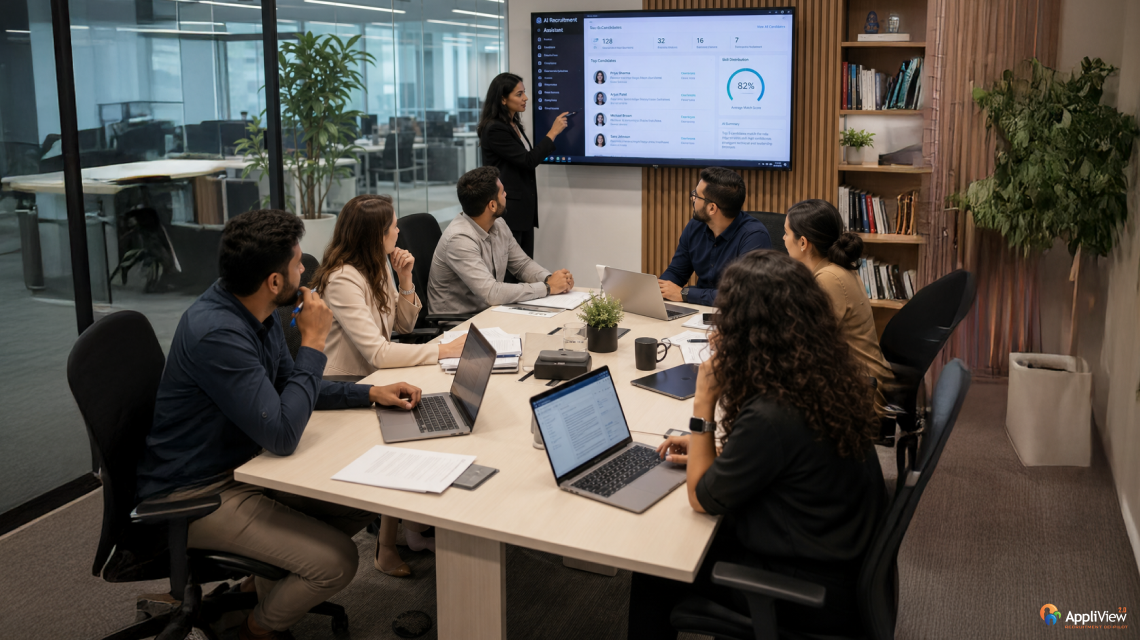
Numerous real-world examples highlight the transformative impact of AI-powered recruitment tools on modern hiring processes. Organizations leveraging advanced AI hiring solutions are achieving significant improvements in efficiency, accuracy, and scalability. For instance, companies using platforms like Paradox have automated high-volume hiring workflows, managing thousands of applicants while drastically reducing administrative workload. Similarly, enterprises adopting Eightfold AI have successfully transitioned to skills-based hiring, leading to measurable reductions in bias and more data-driven decision-making. Mid-sized businesses are also benefiting from recruitment automation, with tools like Zoho Recruit enabling automated job descriptions, streamlined candidate sourcing, and significantly reduced time-to-hire. Additionally, innovative platforms such as Juicebox have demonstrated up to a 70% reduction in sourcing time, allowing recruiters to focus on strategic hiring decisions. These success stories clearly show how AI recruitment tools enhance productivity, improve candidate quality, and redefine the future of talent acquisition.
Navigating Challenges and Limitations
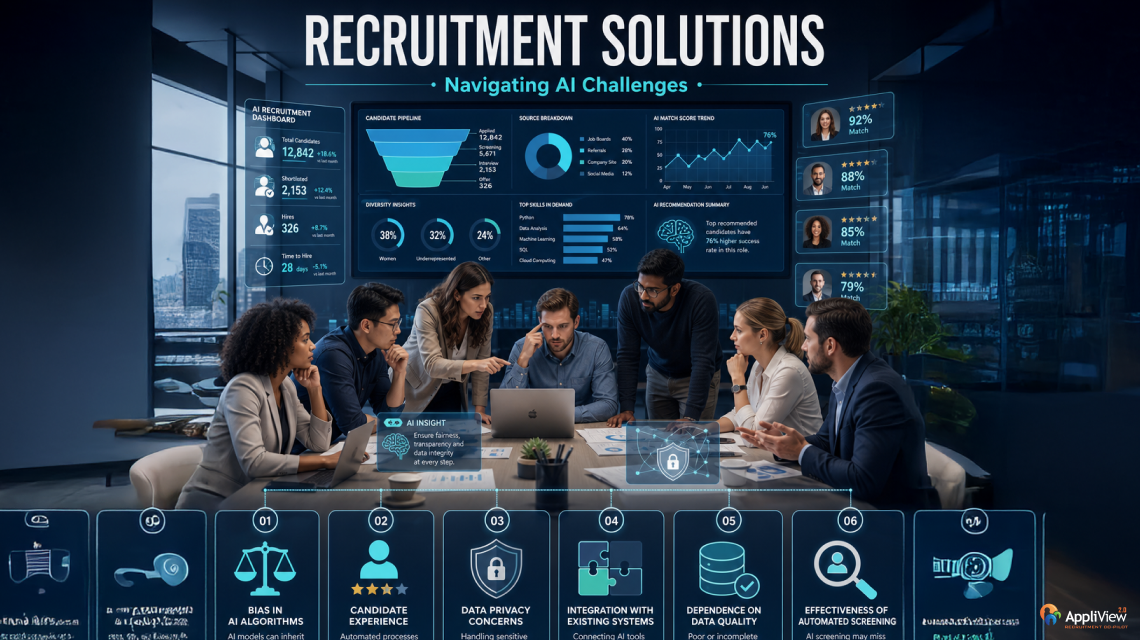
Despite the clear advantages of AI-powered recruitment tools, several challenges must be carefully managed to ensure effective and ethical adoption. Concerns around bias in training datasets can impact the fairness of AI hiring solutions, making transparency and regular auditing essential. Integration with existing systems can also be complex, especially for organizations using legacy infrastructure, which may slow down recruitment automation efforts. Additionally, past controversies involving platforms like HireVue have raised important questions about decision-making transparency and the ethical use of AI technologies. Data privacy is another critical factor, with regulations such as GDPR and CCPA requiring strict compliance. Platforms like MokaHR are addressing these concerns by implementing privacy-first and compliant frameworks. While AI recruitment tools significantly enhance efficiency, experts emphasize the importance of human oversight to ensure balanced hiring decisions that consider both technical qualifications and cultural fit, creating a more holistic and responsible talent acquisition strategy.
Future Possibilities in AI Recruitment

The future of AI-powered recruitment tools is poised to transform hiring even further, driven by innovations in AI hiring solutions and advanced automation technologies. Emerging trends such as multimodal AI—integrating voice, video, and intelligent analytics—are set to enhance recruitment automation by making candidate evaluation more comprehensive and accurate. Looking ahead, breakthroughs like quantum-enhanced matching could enable faster and more precise global talent assessments. At the same time, advancements in bias detection, personalization through candidate analytics, and diversity-focused tools will redefine modern talent acquisition strategies. As these technologies evolve, AI recruitment tools will play a critical role in building more inclusive, efficient, and data-driven hiring processes across industries.
Conclusion
The rise of AI-powered recruitment tools has fundamentally transformed how organizations attract, assess, and hire top talent. From faster screening to more accurate candidate matching, these AI hiring solutions offer significant advantages for businesses seeking efficiency and scalability. However, selecting the right platform requires careful evaluation of organizational needs, budget, integration capabilities, and compliance requirements. Companies that strategically adopt AI recruitment technology today will gain a long-term competitive edge in securing high-quality talent and optimizing their talent acquisition strategies.